Choosing running shoes isn’t always easy. There are very lightweight models, designed for running fast and feeling more agile with every stride. And there are shoes with plenty of cushioning, designed to protect your legs, cover more kilometres and run in greater comfort.
It’s a very common dilemma: do I need lightweight shoes or cushioned ones?
The answer depends on several factors: your fitness level, your pace, the distance you’ll be running, your weight, your technique, the type of training you do and your goals. There’s no such thing as a perfect shoe for everything, but there is a shoe best suited to each purpose.
In this guide, we explain the differences between lightweight and cushioned shoes, when to choose each type and how to combine them if you want to build a good rotation of shoes.
What are lightweight shoes?
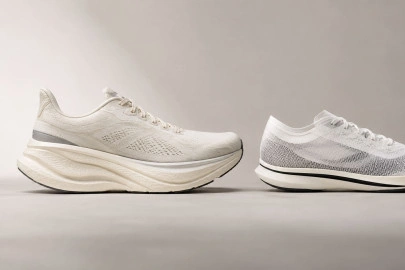
Lightweight shoes are designed to give you a greater sense of agility whilst running. They tend to have less structural support, a thinner midsole and a design that prioritises responsiveness over maximum protection.
That doesn’t mean they lack cushioning. In fact, many modern fast running shoes combine highly responsive foams with reduced weight. But their priority isn’t to give you the most protected stride in the world, but to help you move fluidly, accelerate better and experience a quicker transition.
These are shoes that usually work very well for high-quality training sessions, fast-paced runs, interval training, changes of pace, short races or days when you want to feel a bit more spark.
What are cushioned shoes?
Cushioned shoes are designed to offer greater protection, comfort and a softer feel underfoot. They usually have a thicker midsole, provide greater shock absorption and a more comfortable ride on long runs or during daily training sessions.
These are the trainers many runners choose for clocking up the kilometres, preparing for long-distance races or running at a comfortable pace without putting too much strain on their legs.
That doesn’t mean they’re slow shoes, either. Today, there are highly cushioned models that also offer good responsiveness. But their main strength lies in protecting, stabilising and supporting the foot for longer periods.

Main differences
| Feature | Lightweight shoes | Cushioned shoes |
|---|---|---|
| Feel | Agile, fast and direct | Comfortable, secure and soft |
| Use | Sets, high-intensity intervals, competition, fast training | Runs, long runs, daily training |
| Protection | Less or more fitted | Greater shock absorption |
| Stability | Depends on the model | It is usually more stable and safer |
| Pace | Mid-high or high | Mid, gentle or steady |
| Distance | Short, fast training sessions or competition | Medium and long rides, and everyday use |
| Runner profile | Runners with good technique or those looking to improve their speed | Runners who prioritise comfort and protection |
When to choose lightweight shoes
Lightweight shoes make a lot of sense when the aim is to run faster or experience a more dynamic stride.
Sets
If you’re doing short intervals, tempo runs or speed sessions, a lightweight shoe can help you move more effectively. As it’s lighter and feels more responsive, it makes it easier to take quick strides and make agile transitions.
In this type of training, a shoe that’s too bulky can feel clunky, especially if you’re aiming for a fast pace.
Short competition
In 5K or 10K races, many runners prefer lightweight shoes because they allow them to run with a faster, more natural feel. The shorter and more explosive the race, the more important lightness tends to be.
That said, not all runners need the most aggressive model. If you’re still just starting out or plan to run at a leisurely pace, a lightweight training shoe might be enough.
Lively training sessions
Not every fast day involves interval training. There are also live runs, progressive runs or training sessions where you want to feel comfortable but maintain a slightly faster pace.
This is where fast training shoes come into their own: models that are lighter than a classic running shoe, but not quite as extreme as a pure competition shoe.
For runners with good technique
Runners with a more efficient running style tend to cope better with lightweight shoes. If you have a good foot strike, plenty of strength and don’t need as much protection, you can really enjoy this type of shoe.
On the other hand, if you tend to put a lot of strain on your calves, experience frequent discomfort or are looking for maximum comfort, these might not be the best choice as your main trainers.
Lightweight shoes for fast-paced training
Choose lightweight shoes if you’re looking for a more agile stride for interval training, changes of pace, short races or training sessions where you want to run with more spring in your step.
When to choose cushioned shoes
Cushioned shoes are the safest choice for most runners on a day-to-day basis. Especially if you’re going to be clocking up the kilometres, training for a long race or prioritising comfort.
Everyday training
If you run several times a week, a cushioned running shoe could be your best choice. It allows you to go for a run in comfort, protects your legs and ensures a more comfortable stride over longer distances.
For many runners, this type of shoe is the most important one in their rotation.
Long-runs
As the distance increases, protection becomes more important. On long runs, a shoe with good cushioning helps to reduce the sensation of cumulative impact and allows you to maintain a more comfortable stride for longer.
If you’re training for a half-marathon, marathon or long-distance trail run, it makes perfect sense to choose a cushioned model.
Beginners
If you’re just starting out with running, it’s usually best to prioritise comfort, stability and protection. A shoe that’s too light or demanding may not be up to the job if your muscles or technique aren’t yet adapted.
In your first few weeks or months, the important thing is to build up consistency, not to look for the fastest shoe.
Heavyweight runners
Heavier runners tend to benefit from shoes with more support and cushioning, particularly on long runs or when training on tarmac. It’s not a hard and fast rule, but it is a common recommendation when looking for greater protection.
Recovery
After an intense session, a race or a busy week, a pair of cushioned shoes can help you run smoothly and feel better. They’re perfect for those days when your body isn’t crying out for speed, but for comfort.
Cushioned shoes for racking up the kilometres
Choose shoes with good cushioning for daily training sessions, long runs, easy runs and days when you want to run in maximum comfort.
Lightweight shoes are not always the best
People sometimes think that a lighter running shoe is automatically better. But that’s not always the case.
A lightweight running shoe can help you run faster, but it can also place greater demands on your muscles. If it offers less protection, less stability or has a more aggressive design, it may not be the best choice for everyday use.
The mistake lies in choosing a running shoe based solely on its weight. Lightness matters, but it shouldn’t take precedence over comfort, stability and the actual use you’ll be putting it to.
If you’re going for a gentle run, covering a lot of kilometres or training after a tough day, a very light running shoe may not offer you any clear advantage.
Cushioned shoes are not always slower
There is also the opposite misconception: the idea that a cushioned running shoe is heavy, slow or only suitable for beginners.
That is no longer the case. Many modern shoes with plenty of cushioning use lighter, more responsive foams, geometries that facilitate the transition, and designs aimed at comfortable running without sacrificing dynamism.
A good cushioned running shoe can be perfect for long runs, daily training sessions and even medium-paced runs if you’re looking for protection without sacrificing a smooth stride.
The key lies in choosing the right model, not in assuming that more cushioning always means less performance.

What to choose depending on your type of training
Everyday training
For easy runs, we’d usually go for cushioned shoes. You’re running at a comfortable pace, you want to protect your legs, and you don’t need the lightest possible shoes.
Best option: cushioned shoes or everyday training shoes.
Fast training and sets
For endurance runs, fartlek or pace changes, a lightweight shoe can give you a better feel. You’re looking for responsiveness, agility and a faster stride.
Best option: lightweight shoes or fast training shoes.
Long Run
On long runs, cushioning is usually more important than weight. The longer you run, the more you’ll appreciate a comfortable, supportive ride.
Best option: cushioned shoes or long-run shoes.
5K or 10K run
If you’re looking for performance, a lightweight shoe might be just the thing. If your aim is to finish comfortably, a responsive training shoe might be enough.
Best option: lightweight shoes if you’re looking for pace; cushioned shoes if you prioritise comfort.
Half marathon
This depends very much on your level. To run fast, you can choose a lightweight, responsive shoe. To finish your run feeling good, a cushioned, comfortable shoe might be better.
Best option: a hybrid or cushioned-responsive model.
Marathon
In a marathon, comfort is absolutely crucial. A lightweight shoe might work if you have experience and good technique, but many amateur runners will fare better in a cushioned, stable and efficient shoe.
Best option: cushioned, responsive and tried and tested on long runs.
Trail running
When it comes to trail running, it’s not just about weight or cushioning. Grip, protection, stability and the terrain are also important. For short distances and fast terrain, a lighter shoe can work very well. For technical mountain terrain or long runs, more protection is better.
Best option: it depends on the terrain and the distance.
Quick guide: which one do you need?
| Training | Best option |
| Beginner | Cushioned |
| 2-3 times a week. Smooth run | Cushioned |
| Half marathon | Cushioned or mixed |
| Marathon | Cushioned or stable |
| Sets or fast training | Lightweight |
| 5K or 10K runs | Lightweight |
| Good technique and experienced runner | Lightweight |
| Versatile running shoe | Mixed, comfortable |
| Heavyweight runner or more protection | Cushioned |
| Wide range of shoes | 1 Cushioned + 1 lightweight |
The best option: to have a rotation
If you run regularly, there’s no need to choose just one pair. In fact, one of the best decisions you can make is to have a small rotation of running shoes.
A very simple combination would be:
1. Cushioned shoes for everyday use
For easy runs, long runs and regular training sessions.
2. Lightweight or fast training shoes
For interval training, changes of pace and fast runs.
With this rotation, each pair of shoes is used where it performs best. What’s more, alternating between different models can help you vary your running experience and distribute the load on your muscles.
You don’t need five pairs. With two well-chosen pairs of shoes, many runners cover practically all their training needs.
How to tell if a shoe is too light for you
A lightweight running shoe may not be the best choice if you find that:
- You put a lot of strain on your calves or soleus muscles.
- You end up with discomfort after every training session.
- You lack stability.
- You feel too much impact on tarmac.
- You’re only comfortable at high paces.
- You can’t tolerate it on long runs.
- It forces you to change your running form too much.
If this happens to you, only use them on specific days or look for a more balanced model.
How to tell if a shoe is too cushioned for you
A heavily cushioned running shoe might not be right for you if you notice that:
- It feels too heavy.
- You find it hard to change pace.
- You lose the feeling of contact with the ground.
- You find them clumsy on bends or when changing direction.
- You don’t enjoy wearing them on fast training runs.
- You only use them for very gentle runs.
In that case, you might need a lighter, more responsive shoe or one with a less bulky design.
Therefore: cushioned or lightweight?
The most honest answer is: it depends on how you’ll use them.
Choose lightweight shoes if you want to run fast, do interval training, compete over short distances or experience a more agile feel underfoot.
Choose cushioned shoes if you’re looking for comfort, protection, long runs, daily training or a more reliable pair for clocking up the kilometres.
And if you run several times a week, the ideal approach is to combine both: a cushioned shoe for base training and a lighter pair for your faster sessions.
At Running Emotion, you’ll find running shoes for every type of runner: lightweight models for fast training sessions, cushioned shoes for racking up the kilometres, and options for long runs, fast training, competition, trail running and daily training.
Choose according to your goal, your pace and how you feel. Because the best shoe isn’t always the lightest or the most cushioned: it’s the one that best suits your running style.