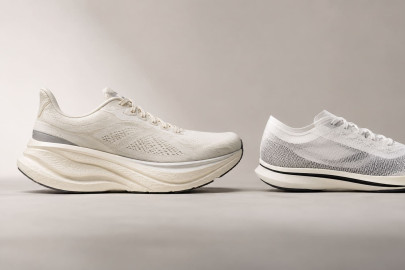
In the world of running, we’re constantly talking about pace, kilometres, training sessions and goals. We analyse our data, strive to improve our personal bests and pay close attention to every detail of our preparation. However, there’s something that often goes unnoticed: not all running shoes are designed to do the same thing, nor do they all respond in the same way to the demands of each training session.
Technological advances in sports footwear have transformed the way we run. Ever-lighter foams, innovative geometries, carbon plates and materials designed to offer an optimal combination of cushioning, stability and responsiveness. But with so many options available, one question we often hear is: do we really need so many pairs of shoes?
The answer lies not in owning more pairs, but in knowing what each one is used for.
HOW MANY PAIRS OF RUNNING SHOES DOES A RUNNER NEED?
There is no such thing as the perfect number. It all depends on your training volume, pace, surfaces and individual goals.
For someone starting out running two or three times a week, a good everyday training shoe may be more than enough. A comfortable, stable and versatile model that allows you to clock up the kilometres with confidence.
However, when you start incorporating higher-intensity training sessions, it may be worth adding a second pair.
Training shoes are the ones that accompany us for the majority of our kilometres. We’re looking for comfort, protection, stability and cushioning that suits our needs.
Fast training shoes are designed for set sessions, changes of pace, intervals or training at demanding paces. They usually feature a lighter, more dynamic construction, which promotes a greater sense of agility.
Competition shoes prioritise performance. Many models feature high-rebound foam, aggressive geometries and carbon plates. Their aim is to improve running efficiency, although this does not mean they are the best choice for all runners or for all training sessions.
Trail running shoes cater to different needs. In the mountains, grip, protection, support and adaptability to the terrain take on particular importance. You won’t need the same features for a simple forest track as you would for a technical route with rocks, mud or steep gradients.
The important thing is to understand that each type of shoe has a specific purpose. Alternating between them allows you to better adapt your footwear to the demands of each session, without always having to use the most advanced or most expensive model.
WHEN SHOULD WE REPLACE OUR SHOES?
One of the most common questions amongst runners is how many kilometres a pair of shoes will last.
As a general guide, many training models have a lifespan of approximately 500 to 800 kilometres. However, this figure should not be interpreted as an exact expiry date.
Durability depends on a number of factors: the runner’s weight, running technique, the surfaces they usually run on, the materials used in manufacture, frequency of use and the design of the model itself.
A running shoe may look as good as new on the outside, yet have lost some of its original properties.
This is because wear and tear is not always visible. As the kilometres add up, the materials in the midsole undergo continuous cycles of compression and recovery that can alter their behaviour.
Furthermore, certain competition models, particularly those prioritising lightness and maximum responsiveness, may show changes in performance sooner than a traditional training shoe.
That is why, rather than simply counting kilometres, we must learn to interpret how we feel whilst running.
SIGNS THAT TELL US A SHOE HAS REACHED THE END OF ITS LIFE
Sometimes our running shoes are telling us they need replacing, but we don’t know how to listen to them.
One of the most common signs is a loss of feel. That pair that used to be comfortable and pleasant starts to feel stiffer, less responsive or simply different.
We should also pay attention to the outsole. Excessive wear on the rubber can compromise traction, especially on wet or uneven surfaces.
Deformities in the midsole, a loss of heel support or significant deterioration of the upper material are other indicators worth checking.
Sometimes, our own bodies can alert us. If we experience discomfort that wasn’t there before, without any significant change in our training load, it’s worth checking the condition of our shoes. However, discomfort doesn’t automatically mean that the shoes are to blame.
A simple tip is to compare your worn-in shoes with a new pair of the same model. In many cases, differences in cushioning, stability and responsiveness are more clearly noticeable this way.
Because a shoe doesn’t need to be worn out to have reached the end of its sporting life.
LOOKING AFTER OUR RUNNING SHOES IS ALSO PART OF OUR TRAINING
We spend time choosing the right footwear, but we don’t always pay the same attention to looking after it.
And yet, just a few simple habits can help us preserve their qualities for longer.
Firstly, avoid putting them in the washing machine. Although it may seem like a quick fix, machine washing can damage fabrics, foam and adhesives. It is best to clean them by hand using a soft brush, water and mild soap.
After training in the rain or on muddy terrain, it’s important to remove any accumulated dirt and allow the shoes to dry properly.
We should also avoid exposing them directly to radiators, tumble dryers or intense sources of heat. Ideally, remove the insoles when necessary and allow them to dry naturally in a well-ventilated area.
Another important aspect is how we use them outside of training sessions. Regularly wearing our running shoes for walking throughout the day also contributes to their wear and tear.
And although it may seem like a minor detail, undoing the laces before taking them off helps to preserve the structure and support of the heel area.
Looking after your shoes isn’t just about keeping them clean, but about preserving the features they were designed for for as long as possible.
THE MOST COMMON MISTAKES WHEN CHOOSING AND WEARING RUNNING SHOES
Probably one of the most common mistakes is to assume that the most expensive or most technologically advanced running shoe will automatically be the best one for us.
The market offers some extraordinary models, but a shoe designed for competing at very high speeds does not necessarily provide the best experience during a leisurely run.
Another common mistake is choosing a shoe based solely on appearance, trends or recommendations from other runners. Just because a model works perfectly for one athlete doesn’t mean it will feel the same for someone else.
We also come across runners who use carbon-plate shoes for absolutely every session, without realising that there are more suitable alternatives for certain types of training.
Choosing the right size deserves special attention. A fit that’s too tight can cause pressure and discomfort, whilst a shoe that’s too loose can compromise support. We need to strike a balance between space, comfort and stability.
And, of course, there’s the mistake of trying to extend the life of our favourite pair indefinitely. We all have those shoes in which we’ve achieved a personal best, prepared for a special race or clocked up hundreds of kilometres. But the emotional attachment shouldn’t prevent us from recognising when they’ve stopped delivering the performance we need.
IT’S NOT ABOUT HAVING MORE, BUT ABOUT CHOOSING WISELY
Running has evolved enormously, and sports equipment is part of that transformation. Today, we have technologies capable of delivering experiences that seemed unthinkable just a few years ago.
However, no innovation can replace the importance of training properly, listening to our bodies and understanding our needs.
Not all runners need four pairs of running shoes. Not everyone needs a carbon plate. And not everyone needs to replace their shoes after running exactly the same number of kilometres.
What we do need is the judgement to choose, look after and recognise when it’s time to replace our kit.
Because ultimately, the best running shoe isn’t always the fastest, the lightest or the most expensive. It’s the one that best meets our needs at any given moment.
“Every training session has a purpose. Every runner has their own needs. And every running shoe has its day.”